
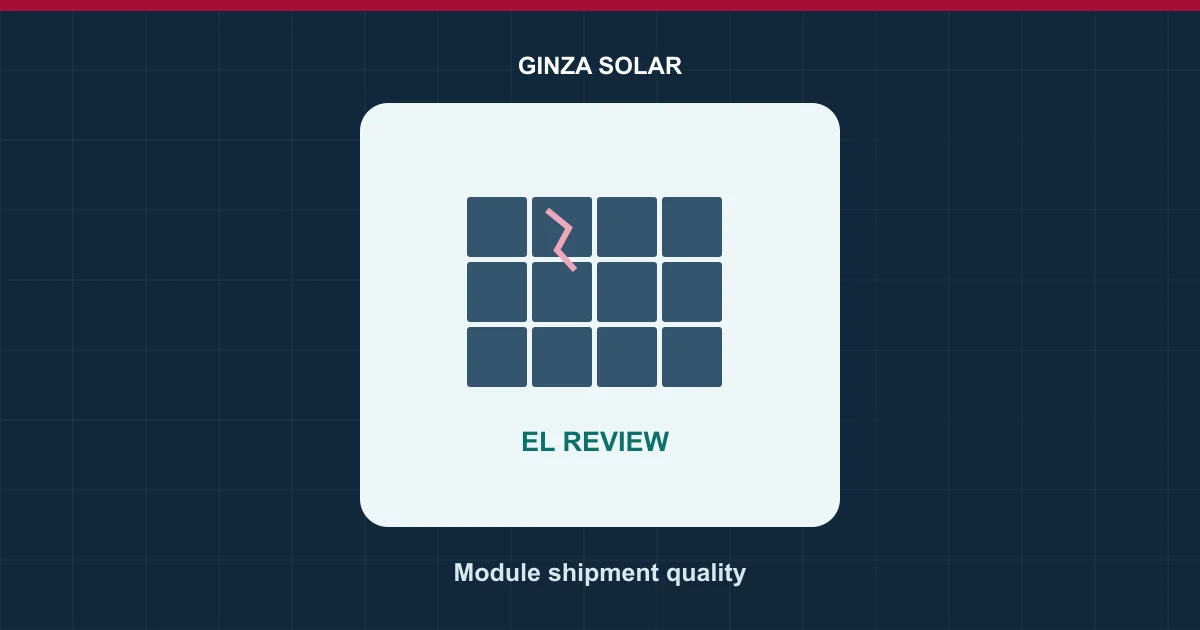
Quick answer. For solar panel electroluminescence testing, agree the capture method, image quality, module serial numbers, sampling and defect-handling rules before the order ships. An EL image helps reveal electrical features and some defects in a module under the selected test conditions. It needs qualified interpretation and supporting evidence. A bright image or a single dark line does not by itself establish the delivered power or the long-term consequence of a feature.
This checklist is for buyers preparing a factory or receiving inspection. It explains how to make the image record comparable and useful when a question arises after transport. The diagrams are teaching schematics, not photographs or test results for GINZA modules.
What EL testing measures
EL imaging uses an electrical supply to place the module’s cells in forward bias and captures the resulting emission with suitable equipment. The IEC TS 60904-13:2018 scope covers image capture, quantitative processing and qualitative interpretation under this test arrangement. The method can reveal patterns associated with cell cracks, disconnected areas, interconnection issues and other electrical non-uniformity. Test current, camera, exposure, geometry and processing affect how a feature appears. Have the inspection team define the method and the basis for interpreting the image.
Use EL alongside the tests relevant to the purchase contract. A visual inspection addresses a different set of observations, while a flash or I–V measurement evaluates electrical behavior under specified conditions. Some findings may need further investigation. Ask the supplier to link the EL record with the module’s identification, power record, inspection date and any repair or retest history.
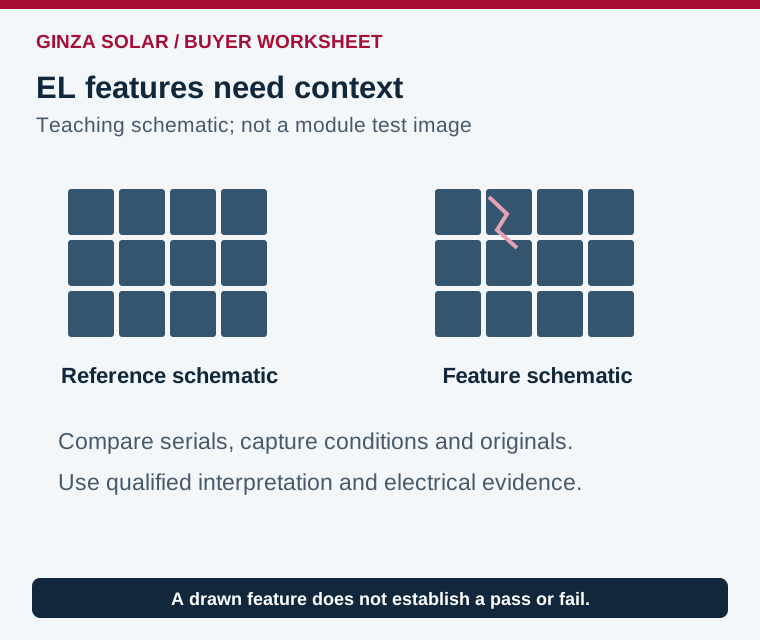
Make the images comparable before comparing defects
| Agree before testing | Information in the record | Why it matters |
|---|---|---|
| Module identity | Model, serial, lot and image filename | Links the observation to the delivered unit |
| Capture conditions | Current and method, environment, camera setup and orientation | Allows a meaningful pre/post comparison |
| Image handling | Original files, processing rules, resolution and metadata | Preserves evidence beyond a compressed report thumbnail |
| Inspection coverage | Population, sample selection and timing | Defines which modules and events the result represents |
| Decision process | Feature categories, thresholds, escalation and retesting | Connects an observation to an agreed response |
Require a consistent orientation so the same cell area can be compared in later images. Preserve the full-resolution original and any processed version used to identify features. A contrast-enhanced export may be useful for review, but it should not replace the source record. State the conditions that make an image unusable and require recapture rather than forcing a decision from poor evidence.
For a pilot review, ask the parties to inspect the same small set of example files before the main test. Confirm that serial labels are legible, cell positions can be matched and the chosen categories can be applied consistently. Discuss ambiguous features and document the agreed escalation rather than changing the interpretation after a commercial dispute arises. Keep the example set clearly separate from the shipment’s actual test results.
Specify how an inconclusive image is treated. A missing original, an unmatched serial or a changed capture condition may prevent a reliable comparison even when a thumbnail looks clear. The inspection plan should say whether the unit is recaptured, held for other measurements or reviewed by a named specialist. The testing party must use the appropriate equipment, electrical procedure and qualified personnel. Receiving staff should follow the approved handling and isolation plan while the inspection team controls the energized test.
Choose the inspection timing for the risk being reviewed
Use the PV module receiving inspection checklist to connect an arrival exception with pallet IDs and serials before deciding whether follow-up EL evidence is needed.
A factory record establishes a pre-shipment baseline for the units tested. A receiving record captures the condition after the documented transport and handling steps. An installation-stage inspection addresses a later point in the chain. If the contract needs to distinguish those events, inspect comparable serial-numbered units at the agreed stages and preserve custody, packaging and handling records.
Define how modules are selected. A convenience sample from accessible pallets can miss a problem elsewhere in the shipment. Have the buyer, supplier and inspection team agree the sampling plan, statistical basis where applicable, retest process and treatment of an inconclusive result. Avoid importing a generic acceptance percentage without identifying the defect classes, lot definition and contractual requirements.
Worked example: investigate a changed image
Suppose a fictional order contains 1,000 modules and the agreed receiving review includes 50 identified units with comparable factory images. At receiving, three units show features that appear different from their baselines. This is a trigger for the agreed investigation. It does not establish that exactly 6% of the whole shipment is defective, nor identify when damage occurred.
First confirm serials, image orientation, current and processing. Ask qualified reviewers to compare the originals and associated electrical records. Check packaging, pallet locations and handling evidence. Apply the agreed hold, extended sampling or additional testing procedure where the evidence warrants it. Preserve both the original and retest results so a later report does not silently replace the initial observation.
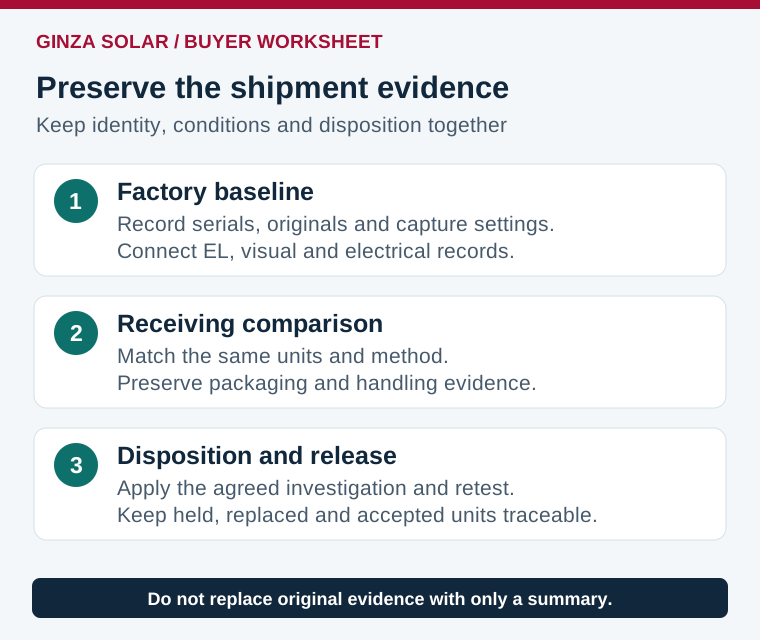
If the parties agree that a module requires replacement or further review, document the serial, classification, evidence and release decision. Keep rejected, held and accepted units distinguishable in the inventory. A corrected packing list should show any replacements so the site can trace what was ultimately installed. The project BOM checklist provides the wider equipment and document controls.
Ask what the report can support
Use the same module identity when the order calls for separate electrical evidence. The flash report purchasing guide explains serial reconciliation, the rated power bin and the decision rule for a borderline measurement.
Clarify whether the report is a production process record, an independent inspection or a contract acceptance result. Identify who captured and interpreted the images and who has authority to release the shipment. If a laboratory or inspection claim is made, verify its relevant scope and the method applied. A certificate for a module design does not replace the unit- or lot-level evidence specified in the order.
For procurement, keep design qualification and shipment inspection as distinct requirements. The IEC 61215 and IEC 61730 guide covers model-level documentation. The module degradation guide discusses long-term assumptions, which cannot be inferred from a single acceptance image.
What to include in the purchase order
- List the exact module model, quantity, lot and serial traceability requirements.
- Reference the selected EL method, capture conditions and image-quality criteria.
- State which stages require testing and how the sample is chosen and matched.
- Define observation categories, acceptance decisions, retesting and escalation responsibilities.
- Require original images, electrical and visual records, the disposition log and final released packing list.
Ask about file delivery before testing begins. Use a practical naming scheme that links the serial, stage and timestamp without manual guesswork. Verify a small set of delivered files against the report and packing list. Confirm that reviewers can retrieve the originals after the project handover and that any revisions retain the previous record. These administrative details often determine whether the technical evidence remains usable when a transport or installation question is raised months later.
Frequently asked questions
Does every dark feature mean the panel must be rejected?
Have a qualified reviewer apply the agreed method and decision rules using comparable images and supporting tests. Appearance alone is insufficient for a universal conclusion.
Does factory EL testing prove transport caused a later change?
Compare matched records and handling evidence. Confirm the test conditions and use the agreed investigation before attributing cause.
Should every module be tested?
Set coverage from the project’s risk, contract and inspection plan. Define the lot, sample and escalation rules before shipping.
Which files should the buyer receive?
Request serial-linked original images, capture conditions, processed review copies where used, supporting measurements and the final disposition record.
References and module quotation
- IEC TS 60904-13, EL capture, processing and interpretation scope
- IEA PVPS review of module failures and diagnostic methods
Compare GINZA module options and request a shipment inspection proposal with the quantity, destination, test stages and required document scope.