

Quick answer: Solar battery container loading must be checked from the exact packed units, actual container and route limits, cargo distribution, restraint, handling and dangerous-goods requirements. Internal container volume alone cannot establish how many batteries may ship. Send the model, package count, outer dimensions, gross mass, stacking restrictions, destination and complete mixed-cargo list before requesting a loading confirmation.
This guide is for distributors, wholesalers and EPC teams converting an approved order into a packing enquiry. It does not publish a fixed GINZA container count: the quantity and loading arrangement require the actual package data and forwarder’s review. Start with the project BOM checklist if the product scope is still changing.
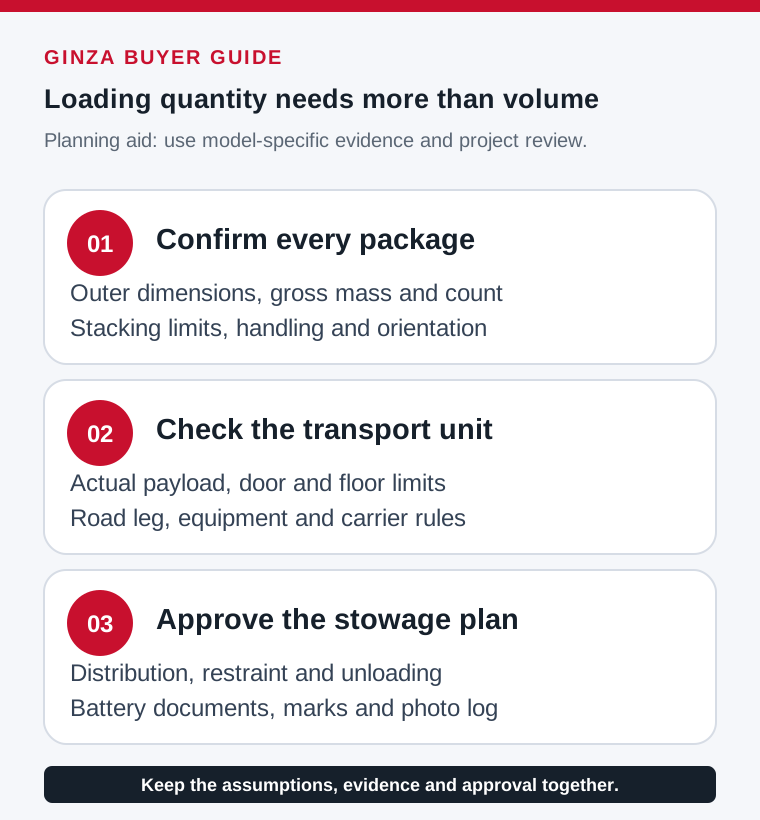
Build a package schedule before a container estimate
Use one row per packed SKU, not merely per product family. A battery’s product dimensions and net weight exclude its carton, crate, pallet, protection and handling space. Request outer package dimensions and gross mass from the final packing specification. Record the permitted orientation, stacking rule, lifting or fork requirements and any packaging revision. Identify samples, spares and accessories that travel separately.
| Package field | Buyer or supplier entry | Why it matters |
|---|---|---|
| Model and package ID | Exact SKU, revision and mark | Connects physical cargo to documents |
| Outer dimensions | Length × width × height, with units | Controls geometric fit and access |
| Gross mass and count | Mass per package and total packages | Supports payload and distribution review |
| Stacking and orientation | Written permitted arrangement | Avoids assuming free vertical space is usable |
| Handling and securing | Fork, lift, restraint and unloading notes | Checks the complete transport chain |
A volume calculation is a screening tool
For an illustrative exercise only, assume a packed unit measures 1.2 × 1.0 × 1.1 m and weighs 600 kg gross. Its rectangular volume is 1.32 m³. Twelve such units total 15.84 m³ and 7,200 kg gross. These invented values teach the arithmetic; they are not dimensions, weights or a loading count for any GINZA battery.
Even if the totals appear below a container’s nominal volume and payload, the plan is not approved. Packages must pass through the door and fit in a permitted orientation; stacking may be prohibited; floor contact loads and mass distribution matter; handling equipment and restraint need space; and the road or rail leg can introduce additional restrictions. Ask the packer and forwarder to check the actual transport unit and all relevant legs.
Check the actual transport unit and route
Do not copy a generic online container dimension into a final drawing. Obtain the applicable unit’s usable internal dimensions, door opening, rated gross mass, tare, payload and floor or local-load information. Review the proposed loading and unloading equipment, access at both ends and any carrier or road limits. Name the party approving these inputs and record the drawing revision used.
The IMO/ILO/UNECE CTU Code is a non-mandatory global code of practice covering packing and securing transport units. It is useful background for the responsible packer; it does not make a specific loading arrangement automatically acceptable or replace applicable mandatory rules.
Mixed batteries, modules and accessories need a stowage plan
First identify every package and its handling constraints. Heavy battery pallets, fragile PV modules, long rails and small accessory cartons cannot be treated as interchangeable blocks. The plan should show package positions, mass distribution, permitted stacking, restraint, protection, access and the unloading sequence. Confirm that the proposed arrangement does not transfer load onto cargo or packaging that was not designed to carry it.
Ask how the first package will be removed at destination and what equipment is available. A plan that looks efficient when loaded by a warehouse forklift may be difficult to unload at the buyer’s site. Agree the package labels, orientation marks and the packing-list order so receiving staff can identify cargo without dismantling the restraint system prematurely.
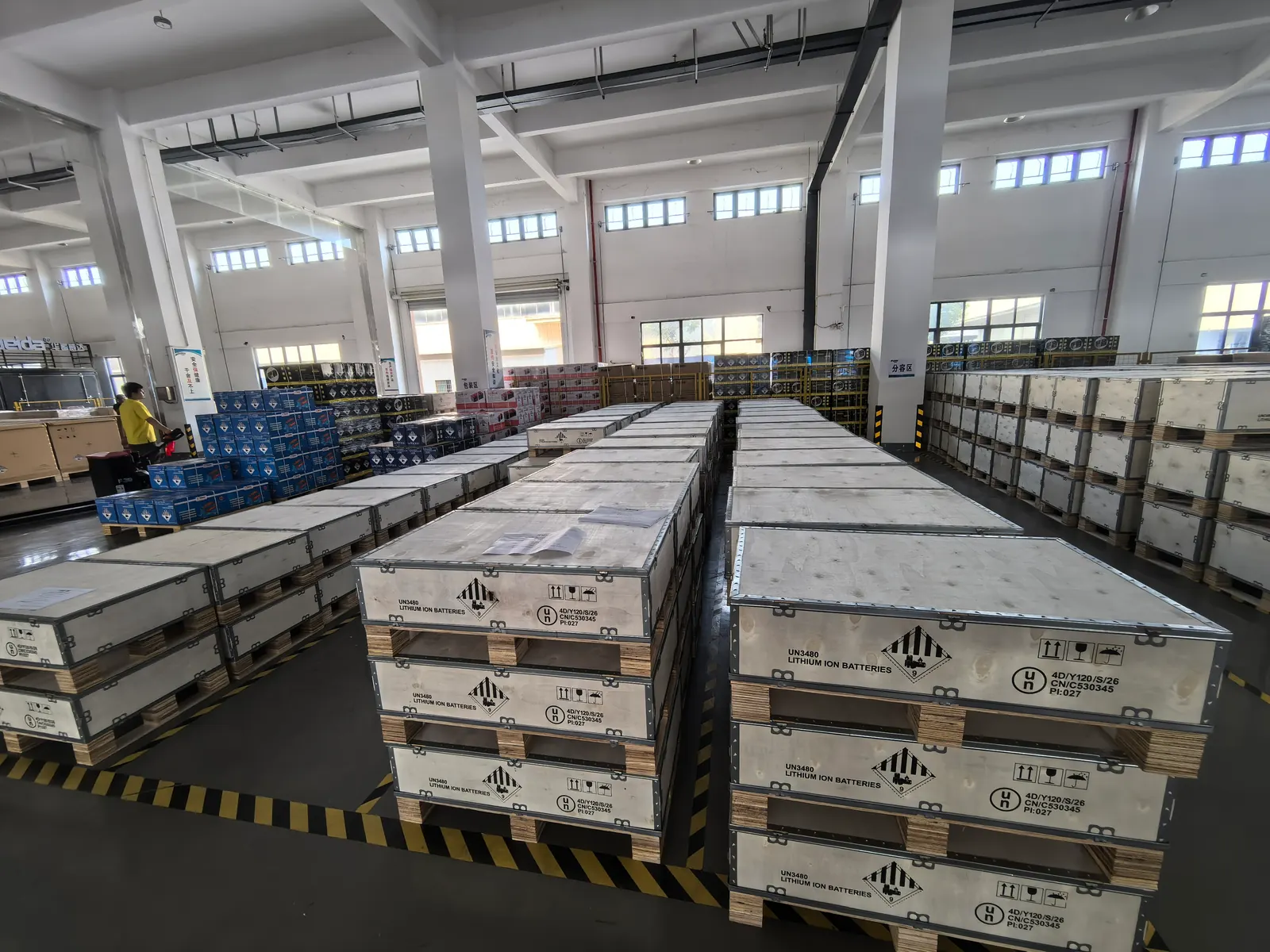
Separate test evidence from shipment paperwork
Match the ordered battery type to its UN 38.3 test summary and model data. Then have the qualified shipper and forwarder determine classification, packing, marks, labels, declarations and carrier conditions for the shipment. A safety data sheet may be requested for review, but it does not replace a UN 38.3 test summary or every shipment-specific document. The battery export document guide explains the distinction.
IMO states that the IMDG Code 2024 edition with Amendment 42-24 is mandatory from 1 January 2026. Sea and air transport use different rule frameworks and carrier conditions. Do not reuse a sea document set as an air approval, or assume an earlier shipment settles the current model and route.
| Release gate | Check before proceeding | Responsible party to name |
|---|---|---|
| Product freeze | Model, revision, quantity and documents agree | Buyer and exporter |
| Packing freeze | Outer sizes, gross mass, handling and marks confirmed | Manufacturer / packer |
| Transport review | Unit, lane, carrier and dangerous-goods requirements checked | Qualified shipper / forwarder |
| Loading release | Stowage, restraint, receiving equipment and evidence agreed | Packer / logistics lead |
Keep a loading and receiving evidence file
Agree the required records before loading starts: package identification and condition, container condition, approved plan, final count and mass, restraint details, loading photographs, seal reference where used, and the final packing list. Photographs support the record but do not replace a competent securing assessment. Record any deviation from the approved plan and obtain the required review before dispatch.
At destination, the buyer should follow the agreed receiving and unloading procedure, verify identity and visible condition, preserve relevant photographs and report discrepancies through the agreed claims process. Keep the commercial delivery terms and responsibility for transport damage explicit in the order documents. A packing photo alone does not establish who bears a loss.
Copyable loading-review enquiry
“Please review the attached order and package schedule for shipment to [country and port]. For each SKU, confirm package count, outer dimensions, gross mass, stacking/orientation and handling restrictions. State the proposed transport-unit basis, mixed-cargo arrangement, securing and unloading assumptions, document requirements and exclusions. Identify the remaining inputs before a firm loading quantity and freight booking can be confirmed.”
Attach the approved BOM, package drawings where available, requested delivery basis and destination receiving information. Mark provisional values and assign who will confirm them. Reissue the package schedule if the model, enclosure, pallet or quantity changes; an old loading sketch should not silently become the plan for a revised order.
Resolve four exceptions before calling the plan final
Provisional package data: If a supplier has not completed the final crate or pallet design, mark the dimensions and mass as provisional and request a confirmation date. Keep the freight and loading estimate conditional on that revision. Do not let a planning placeholder become a firm promise to a customer merely because it appears in a spreadsheet.
Unclear stacking permission: Free space above a package does not establish that another package may sit on it. Obtain the packing designer’s written limit and the proposed restraint arrangement. If stacking is not permitted, ask the planner to show a non-stacked option and the commercial consequence instead of assuming the packaging will tolerate it.
Incomplete receiving information: Ask the importer about access, unloading equipment, package lifting points, destination restrictions and the intended receiving sequence. A mixed-cargo plan may need adjustment if the destination cannot handle the heaviest package or if the items required first are inaccessible. Agree who supplies any special equipment or receiving assistance before dispatch.
A changed order after approval: A revised battery model, extra spares, new pallet or longer rail can affect the layout. Give the change a revision number and send the updated package schedule to the packer and forwarder. Record whether it changes package count, gross mass, securing, documents, freight or schedule. Keep the approved plan with the final commercial order, rather than relying on the first sketch.
For each exception, use a short register with the issue, affected package, owner, required evidence and release decision. The purpose is to make the remaining work visible to both buyer and supplier. A firm booking and delivery commitment should be based on the final reviewed package and transport information, not a collection of unconfirmed assumptions.
Frequently asked questions
Can a supplier quote a fixed battery count from container volume alone?
No. It needs actual package geometry, gross mass, stacking, handling, restraint, transport-unit and route checks. A volume quotient is an early screen only.
Can panels and batteries share one container?
Possibly, subject to packaging, stowage, dangerous-goods and carrier review. Provide the full cargo list and confirm the loading and unloading sequence.
Which weight should the packing list use?
Distinguish product net mass from package gross mass and total shipment mass. Ask the exporter and forwarder to reconcile the final figures across documents.
What happens if packaging changes after the freight quote?
Update the package schedule and request a new fit, mass, securing and commercial review before relying on the earlier booking basis. Keep the superseded revision in the shipment file and identify the final approved version on the packing list and loading instructions.